
What are energy classes?
Energy classes represent the level of energy efficiency of a property, assessing the amount of energy needed to ensure adequate conditions of thermal comfort and use. This classification results from the technical analysis carried out during the energy certification process.
The scale allows for objective comparison of buildings, helping owners, buyers, and tenants understand the energy performance of the home.
- Evaluation of estimated energy consumption
- Analysis of thermal insulation and the building envelope
- Efficiency of installed technical systems
- Impact on indoor comfort throughout the year
- Standardized comparison between properties
How does the energy rating scale work?
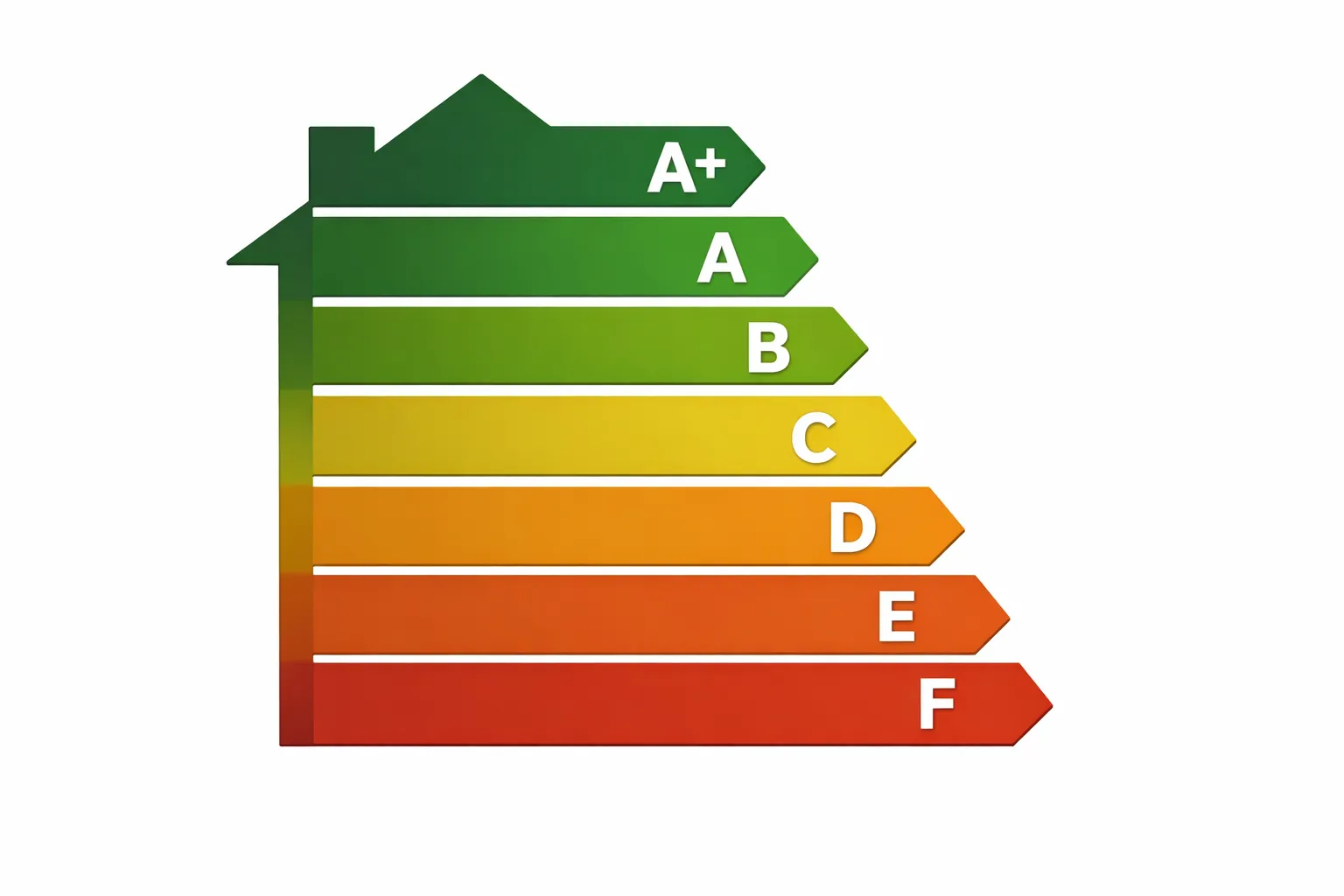
The energy scale organizes buildings by efficiency levels, typically between A+ (most efficient) and F (least efficient). The better the energy class, the lower the energy consumption tends to be for heating, cooling, and producing domestic hot water.
The rating is assigned based on regulatory calculations that consider building characteristics, solar orientation, and existing technical systems.
- A+ : very high energy performance
- A : highly efficient buildings
- B : good energy performance
- C : medium efficiency, common in existing buildings
- D to F : higher energy consumption and lower efficiency
What influences a property's energy class?
Several factors contribute to the final energy rating. The combination of building quality and technical systems determines the level of efficiency achieved.
- Quality of thermal insulation in walls and roofs
- Type of windows and frames
- Solar orientation and building exposure
- Heating, cooling, and ventilation systems
- Domestic hot water production
- Existence of renewable energies
What is the impact of the energy class on consumption?
The energy class is directly related to the property's operating costs. More efficient buildings require less energy to maintain comfortable temperatures, reducing expenses over time.
- Lower heating and cooling costs
- Reduction of the annual energy bill
- More stable interior temperatures
- Less dependence on mechanical equipment
- Reduction of carbon emissions
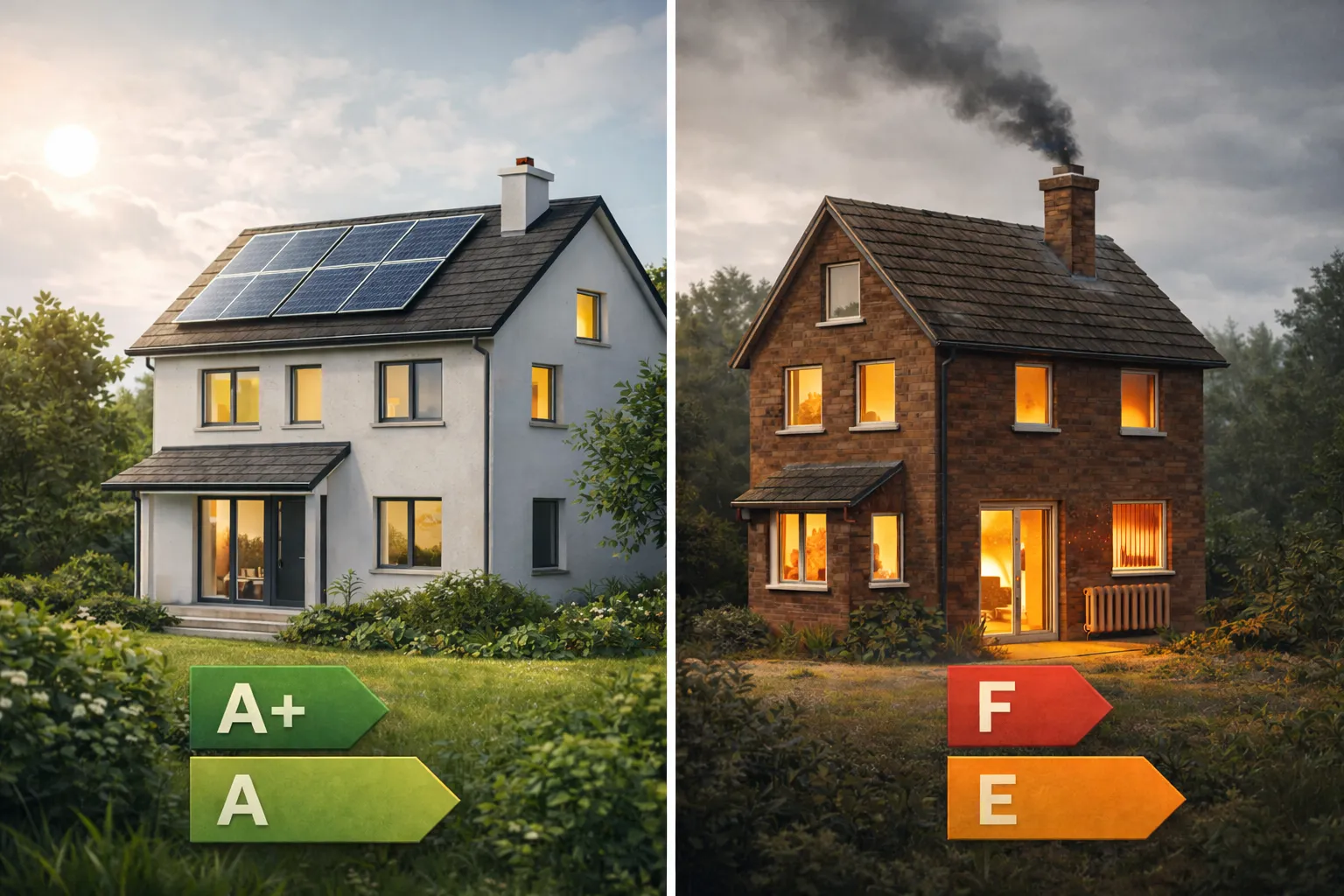
Influence of energy class on property value
Energy rating has become a relevant factor in the real estate market. Buyers and tenants increasingly value efficient homes due to cost reduction and greater comfort provided.
- Greater attractiveness in real estate advertisements
- Possibility of faster sale or rental
- Better perception of construction quality
- Potential increase in market price
Is it possible to improve the energy class?
Yes. The energy class can be improved through technical interventions that increase building performance. Small improvements can have a significant impact on the final rating.
- Reinforcement of thermal insulation
- Replacement of old windows
- Installation of efficient heat pumps
- Integration of solar panels
- Improvement of ventilation and airtightness
Energy classes as a decision tool
More than a simple classification, the energy class works as a technical indicator that supports decisions related to purchase, rental, or rehabilitation. It allows anticipating costs, identifying priority improvements, and understanding the property's energy behavior.
In a context of greater environmental awareness and rising energy costs, knowing the energy class is essential for more sustainable and informed choices.