
What determines the validity of the energy certificate?
The validity of the energy certificate is defined by current legislation and depends on the type of building, its use, and the technical conditions assessed at the time of certification. The document reflects the energy performance of the property at a certain stage of its useful life, considering constructive characteristics, technical systems, and usage patterns.
Whenever these conditions change significantly, it may be necessary to issue a new energy certificate to ensure that the rating continues to correctly represent the building's performance.
What is the period of validity of the energy certificate?
In Portugal, the energy certificate normally has a validity of 10 years for residential buildings and small service buildings, except for specific situations that may require early renewal.
This period applies as long as no relevant changes occur that modify the energy behavior of the property.
- Residential certificates : validity up to 10 years
- Small commerce and service buildings : validity up to 10 years
- Buildings subject to relevant technical changes may require new certification before the deadline
- Validity is indicated on the energy certificate itself
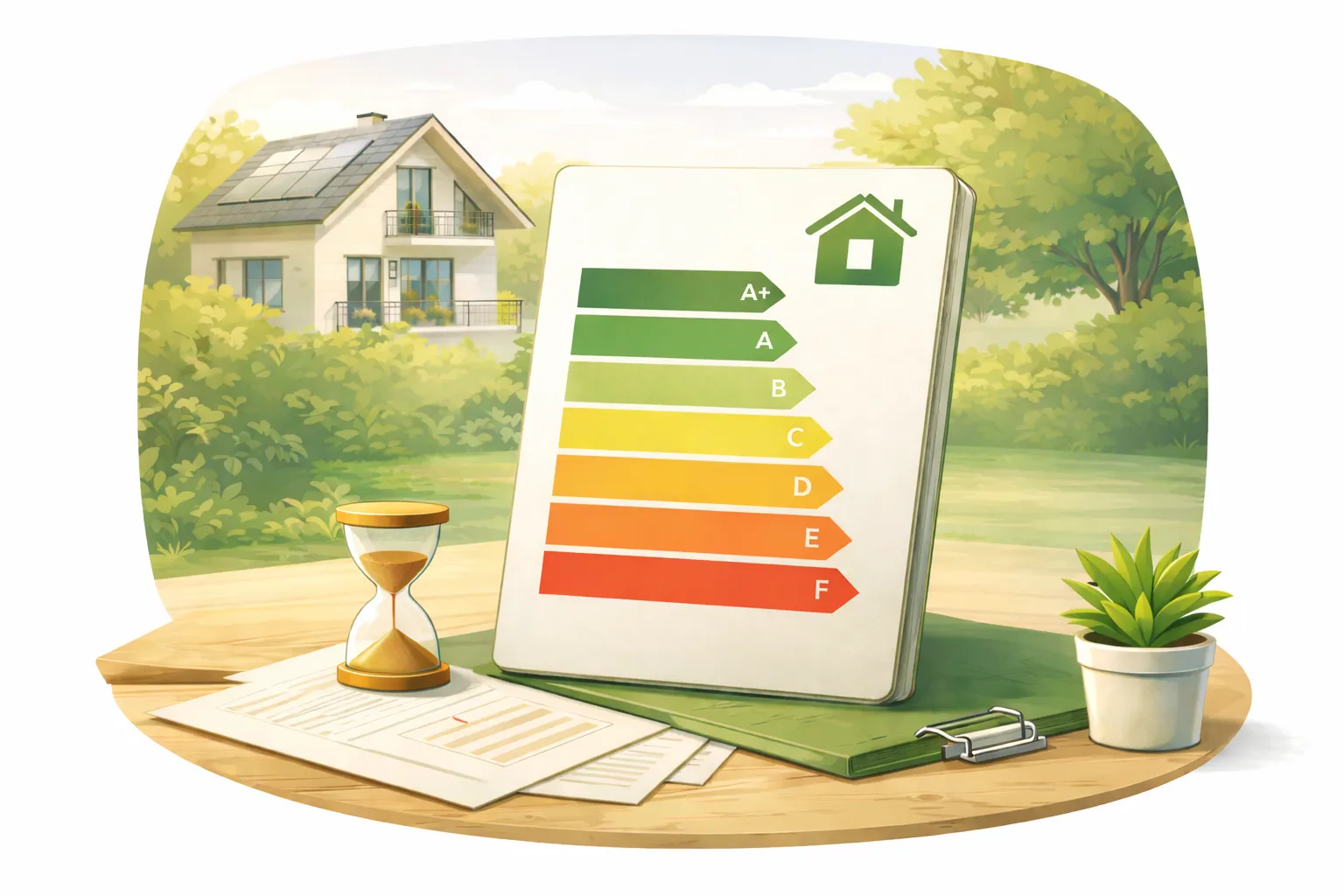
When is it necessary to renew the energy certificate?
Even within the legal deadline, there are situations where renewing the energy certificate may be necessary. Whenever the property undergoes changes that influence energy consumption or thermal comfort, the energy rating may no longer reflect reality.
- Execution of energy rehabilitation works
- Replacement of windows or improvement of thermal insulation
- Installation of new air conditioning or hot water systems
- Significant extensions or alterations of the useful area
- Significant change in the use of the building
Renewal allows updating the energy class and reflecting improvements made to the property.
Situations in which it is mandatory to issue a new certificate
There are specific legal circumstances in which the issuance of a new energy certificate is mandatory, regardless of the validity of the previous document.
- Sale of the property after relevant works
- New rental contract when the certificate has expired
- Completion of new buildings
- Major renovation or rehabilitation interventions
- Technical changes that modify energy performance
In these cases, the previous certificate is no longer sufficient for legal and administrative purposes.
What happens if the certificate is expired?
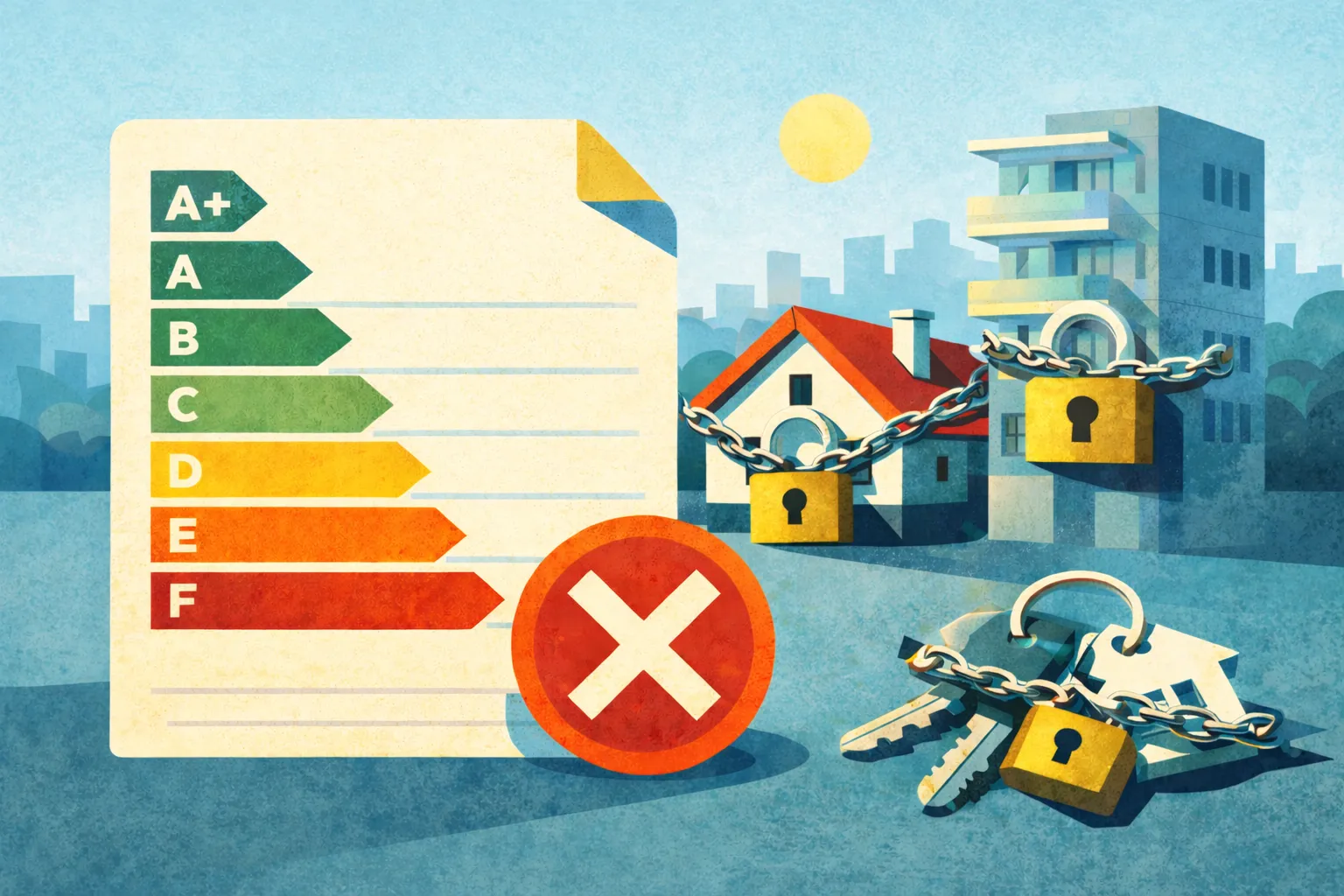
An expired energy certificate no longer meets the legal requirements required in real estate processes. Its use can prevent the completion of transactions and lead to legal consequences for the owner.
- Impossibility of legally selling or renting the property
- Need for a new energy assessment before the transaction
- Possible fines in case of non-compliance
- Delays in deeds or contracts
Renewing the certificate as an opportunity for improvement
The renewal of the energy certificate should not be seen only as a legal obligation. This moment allows evaluating the current performance of the building and identifying opportunities to reduce consumption and improve interior comfort.
Updates made between certifications can result in a higher energy class, increasing the value of the property and making it more attractive on the market.
- Identification of priority energy improvements
- Future reduction of energy costs
- Increase in thermal and acoustic comfort
- Asset valuation of the property
Plan validity to avoid future problems
Monitoring the validity of the energy certificate is an essential practice for owners who intend to sell, rent, or rehabilitate the property without administrative delays. Requesting renewal in advance ensures time for technical evaluation and avoids constraints in legal processes.
Keeping the certificate updated ensures legal compliance, transparency for buyers and tenants, and more efficient management of the building's energy performance.