
The cost of an energy certification: what is included
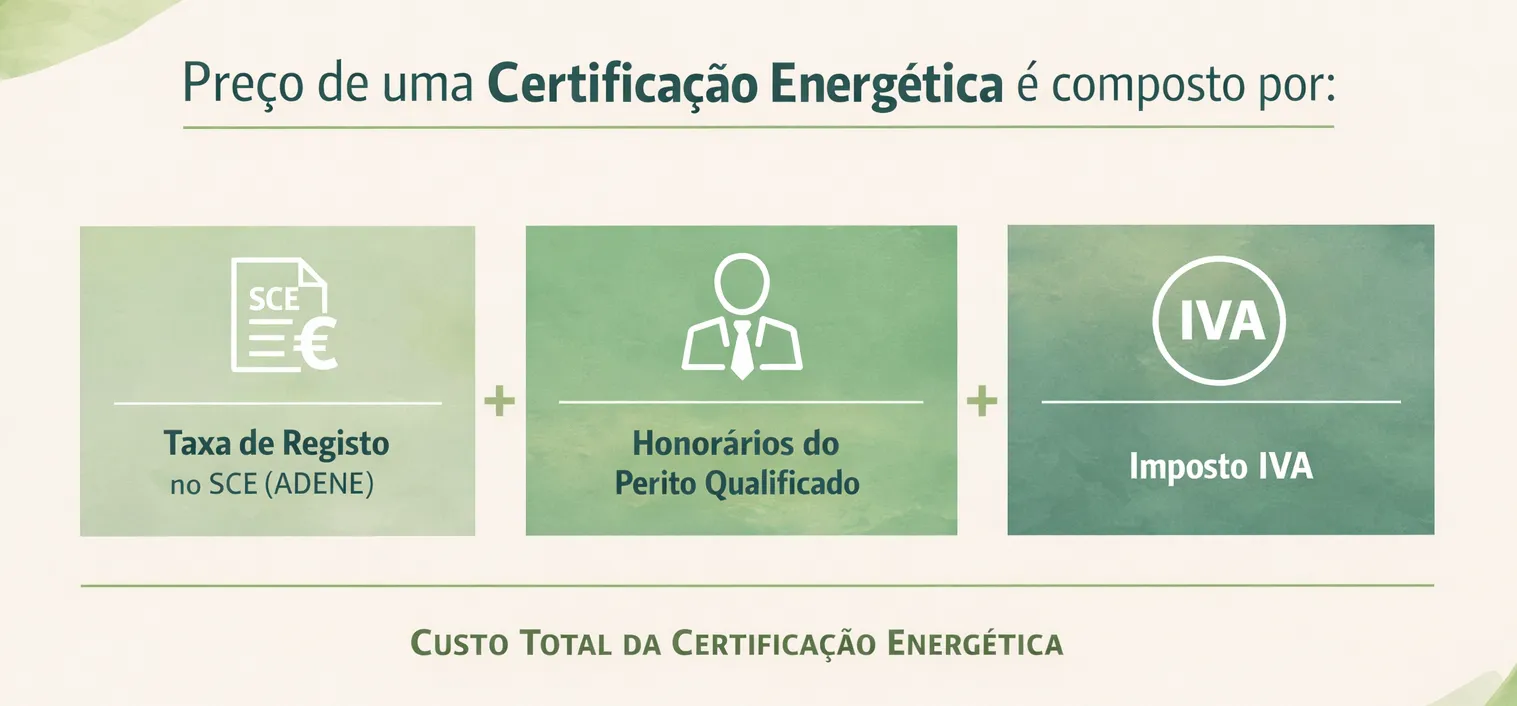
The price of an energy certification is not fixed, but results from the sum of three main components:
- Registration fee in the SCE (ADENE)
- Qualified expert fees
- VAT (23% in mainland, 16% Madeira and Azores)
All are mandatory for the issuance of the certificate.
Click here to calculate an estimate of the cost of your certificate.
ADENE fees for housing and commercial buildings
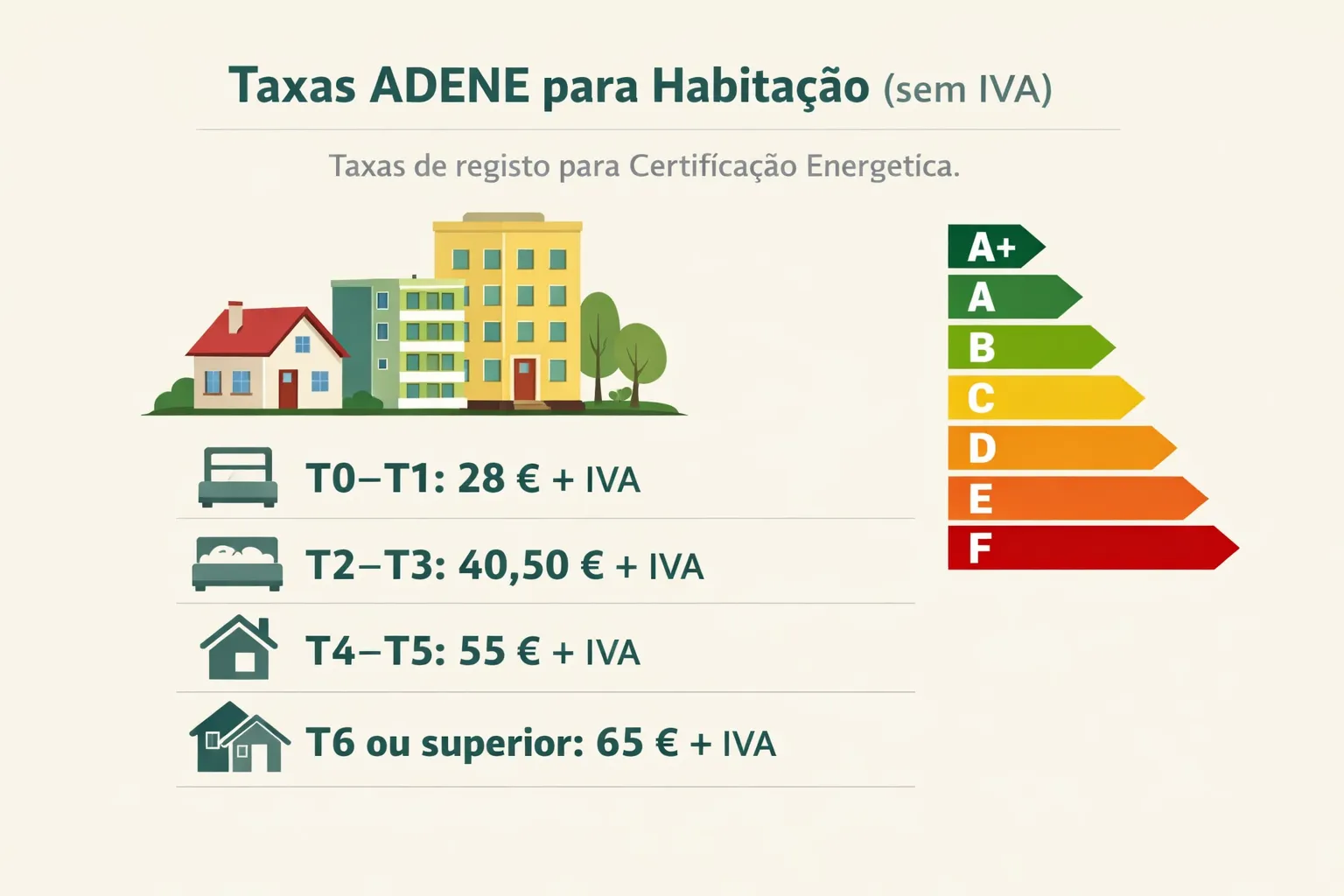
The registration fee is paid to ADENE, the entity that manages the Energy Certification System (SCE), and depends on the property typology.
Housing (without VAT)
- T0–T1: 28 €
- T2–T3: 40.50 €
- T4–T5: 55 €
- T6 or higher: 65 €
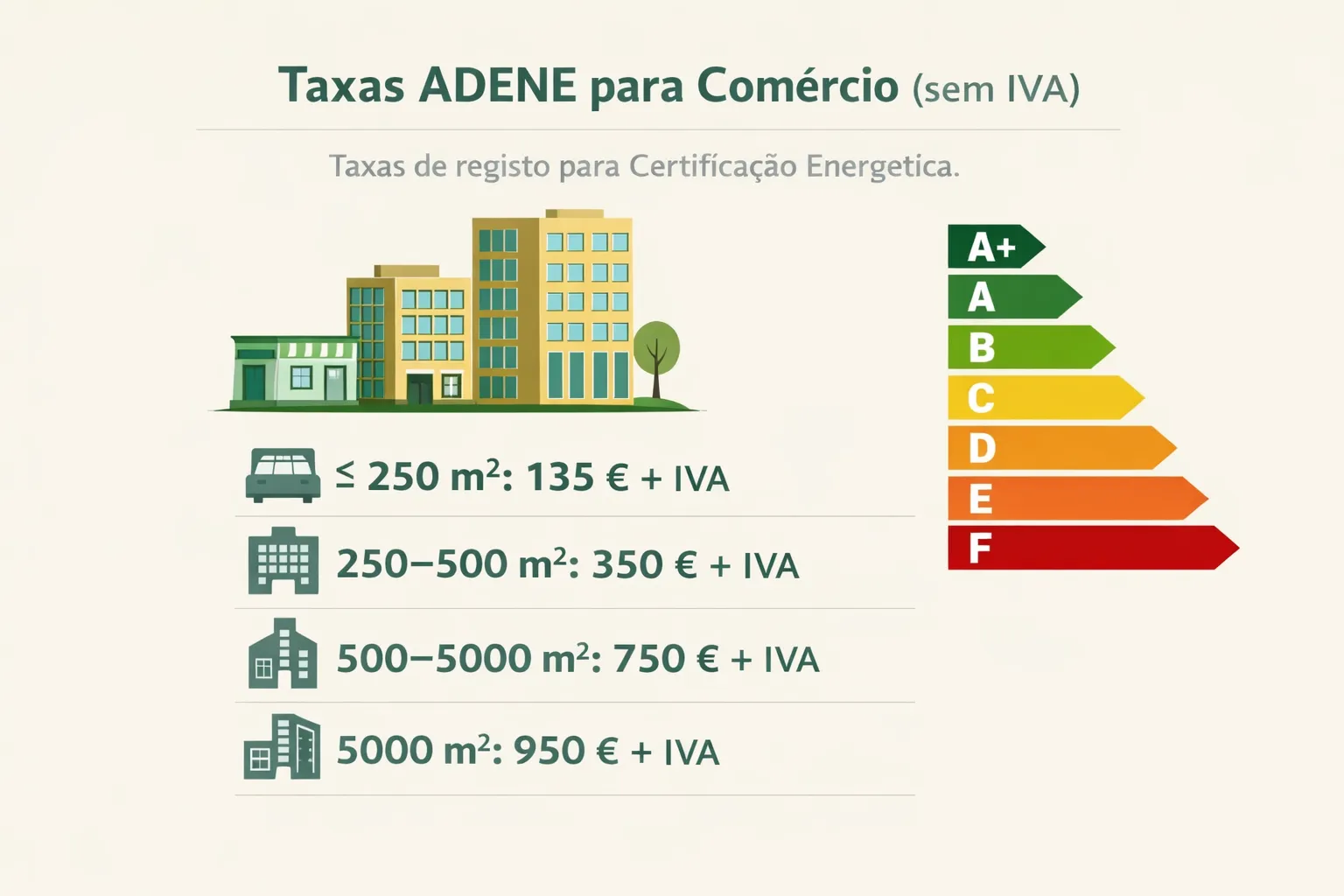
Commerce and services (without VAT)
- ≤ 250 m²: 135 €
- 250–500 m²: 350 €
- 500–5000 m²: 750 €
- > 5000 m²: 950 €
These fees are the same across the country and do not depend on the chosen expert.
Qualified expert fees
Expert fees are not regulated and can vary according to several factors:
- Property typology and area
- Constructive complexity
- Location
- Existence (or not) of plans and technical documentation
- Urgency of the request
In practice, for housing, the most common values range between 120 € and 250 € + VAT (total value, including the ADENE fee). For commercial spaces, fees vary proportionally to the area and complexity, potentially reaching more than 1,000 €.
When hiring an energy certification service, it is important to always confirm if the presented budget already includes the Adene fee and taxes or if they are charged separately.
Why can two certificates have different prices?
Even for similar properties, the cost can vary. The most common reasons are:
- Need for a more detailed technical survey
- Lack of constructive information (walls, insulation, frames)
- Old properties or with undocumented changes
- Expert distance and travel
- Reduced delivery time
A value well below the market should be analyzed with caution: energy certification is a technical act with legal responsibility.
What is included in a professional energy certification
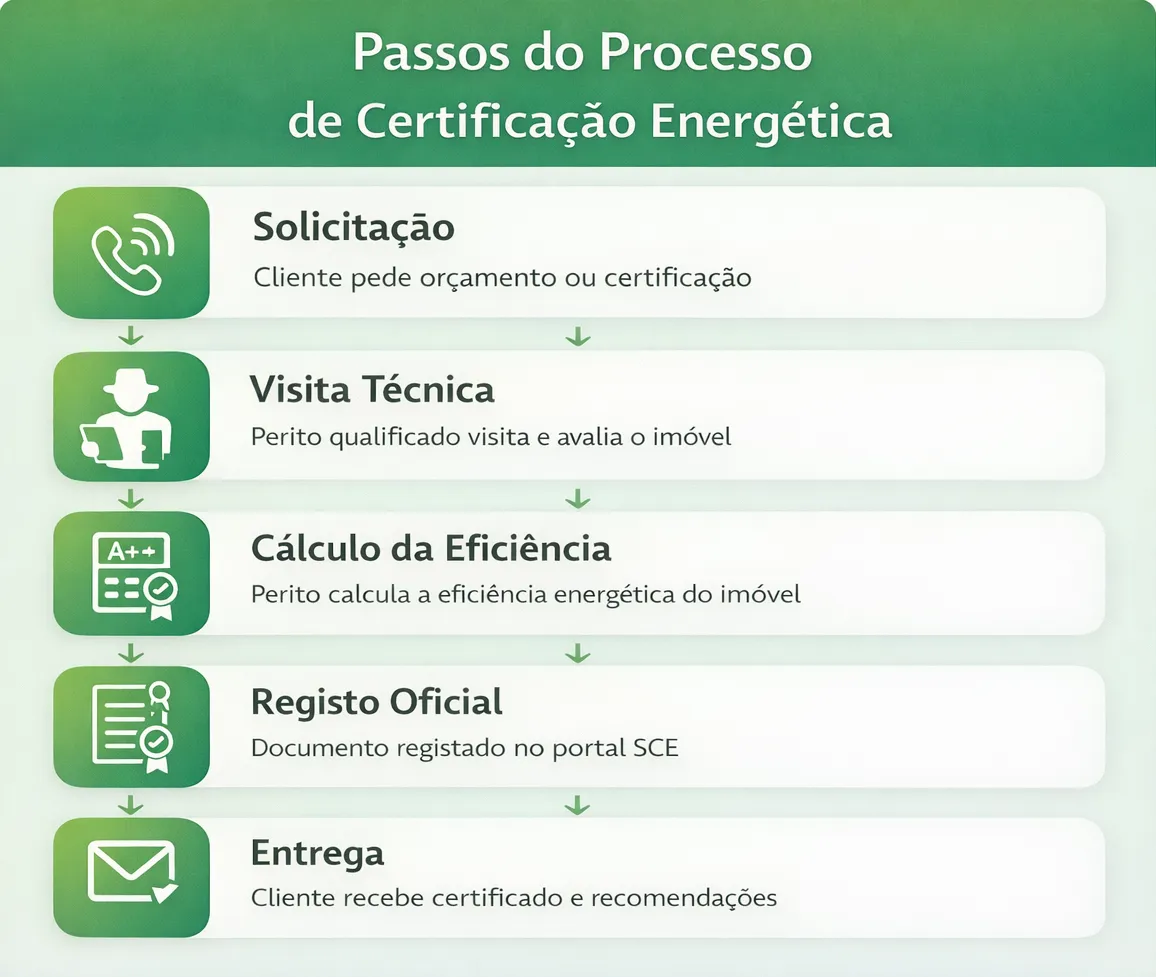
A complete energy certification service includes:
- Technical visit to the property
- Survey of construction characteristics and energy systems
- Energy efficiency calculation according to the SCE
- Official registration on the SCE portal (ADENE)
- Issuance of the energy certificate
- Improvement recommendations (mandatory in the document)
Who pays for the energy certification?
As a rule:
- Sale: the seller owner
- Rental: the landlord owner
In real estate mediation, it is common for the cost to be treated in advance to avoid delays in marketing the property.
Energy certification: cost or investment?
In addition to compliance with the law, energy certification:
- Increases property transparency
- Facilitates the buyer's or tenant's decision-making
- Values properties with better energy performance
- Avoids fines and legal obstacles
For real estate agents, it is also a tool for credibility and advertising in the sales process.