
What is construction licensing?
Construction licensing is the administrative procedure through which the City Council analyzes and approves certain construction, expansion, alteration, or demolition projects for buildings.
This process ensures that the intervention complies with urban planning rules, municipal regulations, and current legislation, ensuring safety, legality, and proper integration of the work within the territory.
- Construction of new homes
- Expansion of existing buildings
- Significant alterations to properties
- Demolition of constructions
- Works subject to urban control
When is a license required?
Not all works require municipal licensing. Depending on the nature of the intervention, some situations may be subject to prior communication or even exempt from prior control.
However, whenever the work alters relevant characteristics of the building or the land, it is essential to check beforehand with the City Council which procedures apply.
- Construction of new buildings
- Expansion of the construction area
- Alteration of the property's volume
- Modification of facades or roofs
- Interventions in areas subject to urban restrictions

What documents are needed?
The necessary documentation varies according to the type of work and the municipality where the property is located. However, there are elements that are usually required in most licensing processes.
Proper preparation of documentation is essential to avoid requests for clarification, delays in analysis, or rejections.
- Architectural project
- Descriptive and justificatory report
- Plans, sections, and elevations
- Responsibility terms from technicians
- Property documentation and identification
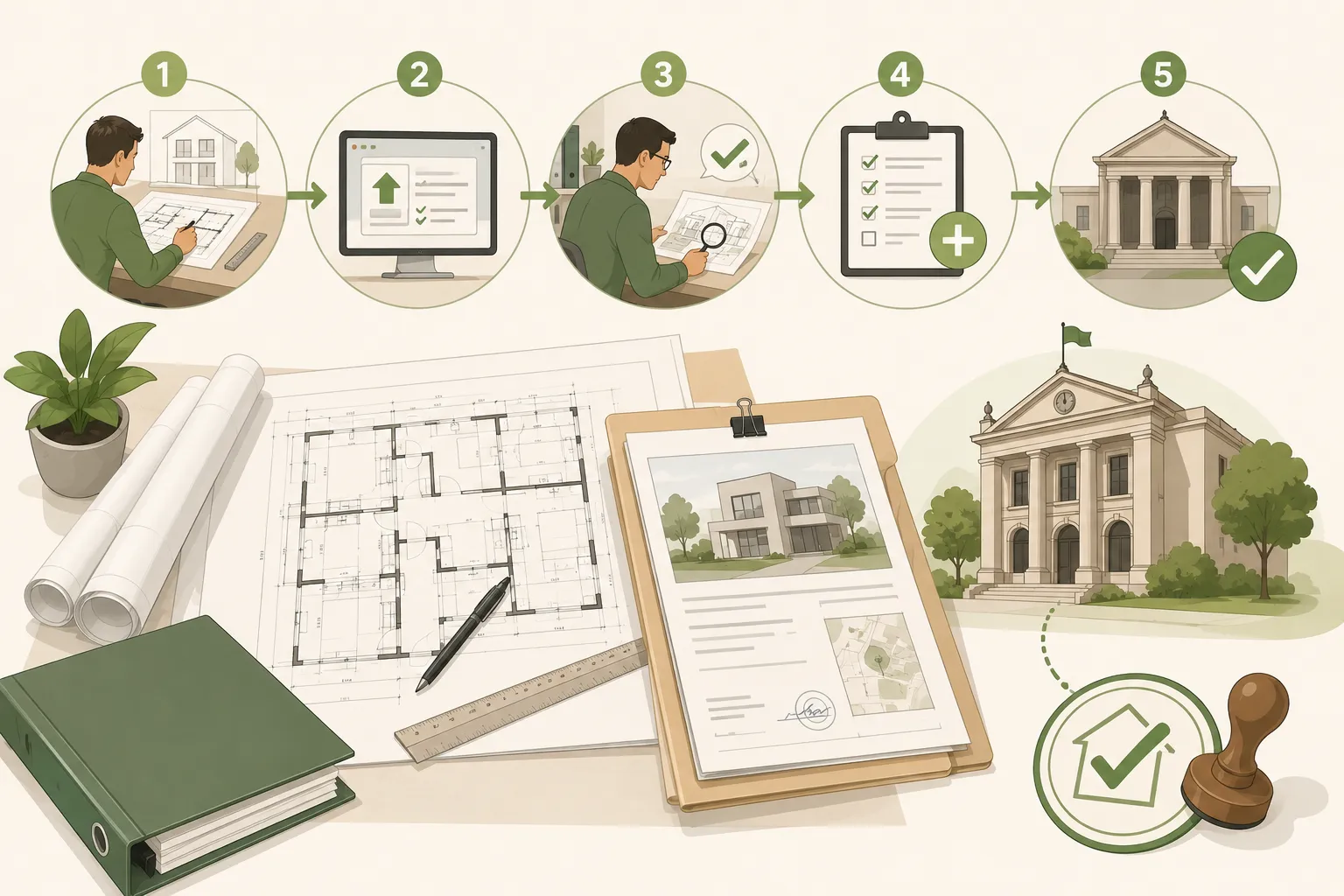
Key stages of the approval process
The licensing process normally follows several phases until the necessary authorization to start the work is obtained.
While there may be differences between municipalities, the fundamental stages tend to be similar across the national territory.
- Project preparation
- Submission of the request to the City Council
- Technical analysis by municipal services
- Request for additional elements, when necessary
- Issuance of approval or final decision
How long does approval take?
Review periods depend on the complexity of the project, the workload of municipal services, and the need for external specialist opinions.
In many cases, incomplete requests or changes during the analysis can significantly increase the time needed to obtain approval.
- Complexity of the intervention
- Quality and completeness of the documentation
- Need for opinions from external entities
- Clarification requests from the City Council
- Volume of processes under review in the municipality
What happens after approval?
After the project is approved and the respective urban permits are issued, the work can proceed according to the conditions defined by the City Council.
At this stage, it is important to ensure that execution exactly matches the approved project, avoiding non-conformities that could create future problems.
- Collection of necessary permits
- Start of construction
- Technical monitoring of construction
- Compliance with approved conditions
- Conducting any necessary inspections
Why work with an architect during licensing?
Support from an architect allows for the development of a project tailored to the client's needs and compatible with legal and urban requirements.
Besides project design, the architect can coordinate document preparation, respond to requests from competent entities, and support the entire approval process.
- Higher probability of approval without delays
- Projects compatible with regulations
- Coordination of technical documentation
- Monitoring the process with the City Council
- Best use of the property's potential
How to prepare a successful licensing process
A well-prepared licensing process reduces risks, avoids delays, and facilitates approval by competent entities.
Before starting any work, it is recommended to evaluate the property's urban constraints, gather the necessary documentation, and count on specialized technical support to ensure all legal requirements are met from the start.
With proper planning and professional monitoring, it is possible to make the process more efficient and move to the construction phase with greater safety and predictability.