
What is bioconstruction?
Bioconstruction is an approach to architecture and construction that seeks to reduce the environmental impact of buildings throughout their entire life cycle : from the choice of materials to the daily use of the home. More than an architectural style, it is a set of principles that prioritize energy efficiency, occupant health, and integration with the surrounding environment.
Unlike conventional construction, which often relies on industrial materials with a high energy footprint, bioconstruction values natural, local, and durable solutions capable of improving thermal comfort and indoor air quality.
- Use of natural or low environmental impact materials
- Reduction of energy consumption during building use
- Improvement of thermal and acoustic comfort
- Promotion of healthier indoor environments
- Integration of construction with climate and location

Fundamental principles of bioconstruction
The application of bioconstruction is based on technical and scientific principles that seek to balance energy performance, sustainability, and human well-being. These principles can be adapted to both new constructions and rehabilitation projects.
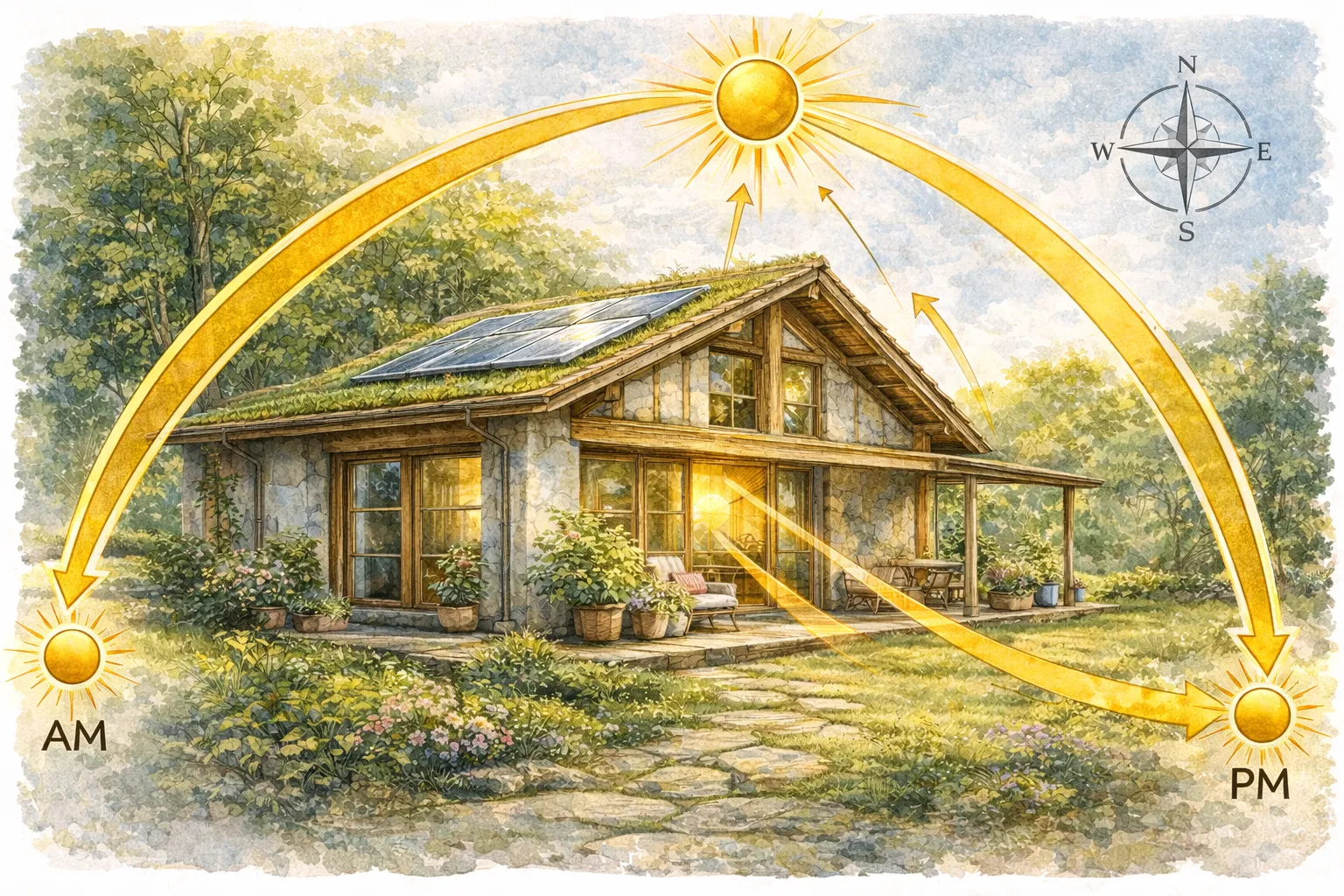
- Efficient solar orientation : harnessing natural light and thermal gains in winter
- Natural ventilation : indoor air renewal without excessive dependence on mechanical systems
- Natural thermal insulation : use of materials such as cork, plant fibers, or wood
- Efficient water management : solutions that reduce waste and promote reuse
- Reduction of toxic materials : choice of finishes and products with low emissions
Most commonly used materials in bioconstruction
Portugal has particularly favorable conditions for the use of natural materials, many of which are already present in local construction tradition. Bioconstruction recovers and adapts these solutions with current technical knowledge, allowing high levels of energy performance to be achieved.
- Cork : excellent thermal and acoustic insulation, renewable and locally produced
- Wood : lightweight structural material, efficient and with a low carbon footprint
- Raw earth (adobe or rammed earth) : high thermal inertia and natural humidity regulation
- Natural lime : breathable finish that improves wall durability
- Plant fibers : sustainable and recyclable insulation solutions
When does it make sense to apply bioconstruction?
Bioconstruction is not only suitable for rural houses or alternative projects. Increasingly, its principles are being applied in contemporary housing, urban rehabilitation, and energy efficiency projects.
It makes particular sense when there is a goal to reduce energy consumption, improve indoor comfort, and create healthier and more durable homes.
- Construction of single-family homes with a focus on energy efficiency
- Rehabilitation of old buildings with humidity or thermal comfort problems
- Projects seeking to reduce long-term energy costs
- Homes in rural or peri-urban areas with greater landscape integration
- Owners interested in sustainable and natural solutions
Bioconstruction and energy efficiency
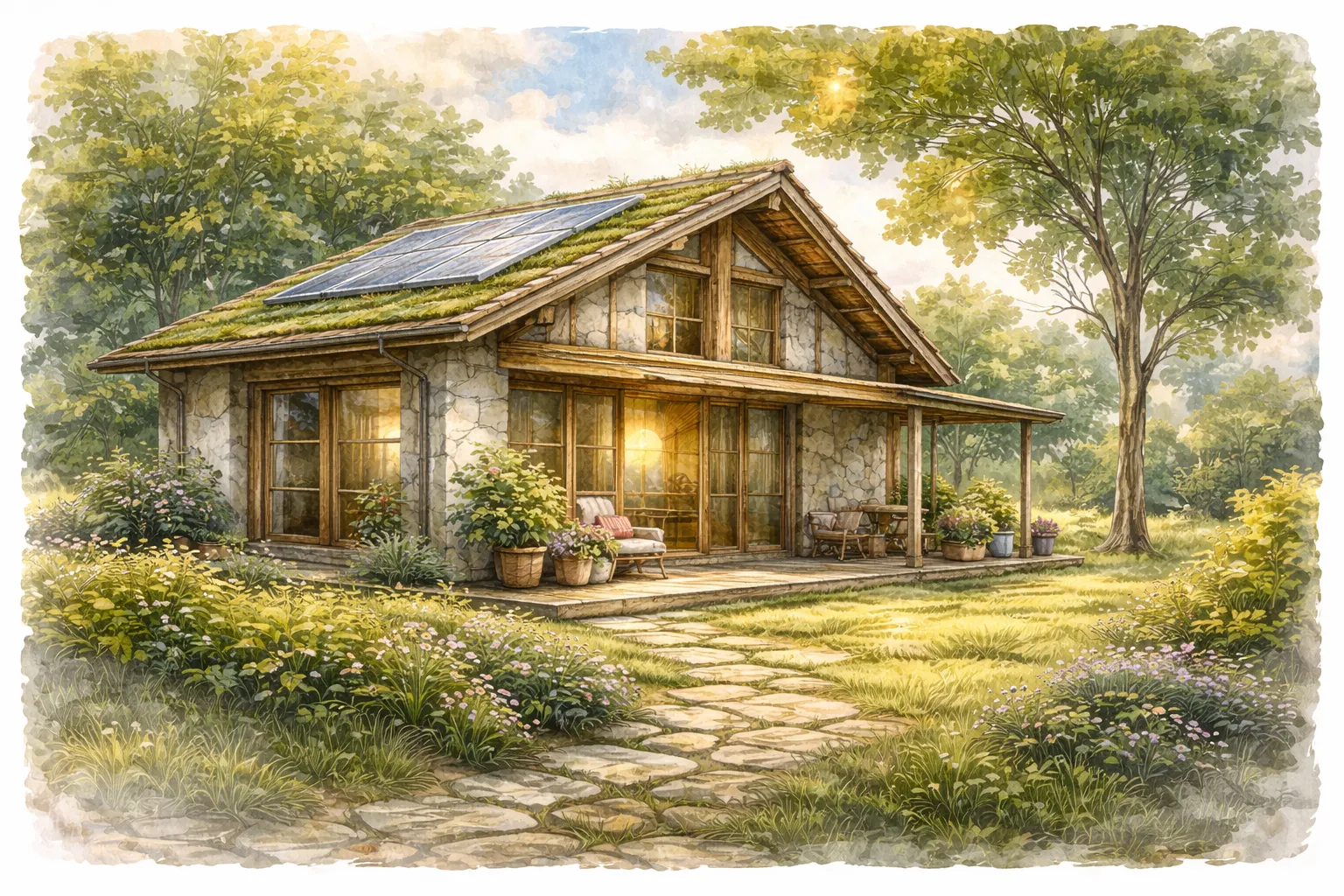
Although often associated only with natural materials, bioconstruction is deeply linked to energy efficiency. A well-oriented, properly insulated and ventilated building requires less energy for heating and cooling, reducing costs and emissions over time.
Many principles of bioconstruction directly complement the objectives of energy certification, contributing to better energy classes and greater property valuation.
Bioconstruction in Portugal: challenges and opportunities
Despite growing interest, there are still some challenges in the widespread application of bioconstruction in Portugal, namely technical unfamiliarity and the perception of higher initial costs. However, when analyzed over the building's life cycle, the investment tends to translate into greater durability, lower maintenance, and significant reduction in energy consumption.
The Portuguese climate, characterized by high sun exposure and moderate thermal amplitudes, offers ideal conditions for applying passive strategies that are part of bioconstruction.
A balanced approach between sustainability and comfort
Bioconstruction does not seek to return to the past, but rather to combine traditional knowledge with contemporary technology to create more efficient, healthy, and future-adapted buildings. When well designed, it allows achieving a balance between environmental sustainability, daily comfort, and economic viability.